Articles

Find out about the pegword mnemonic

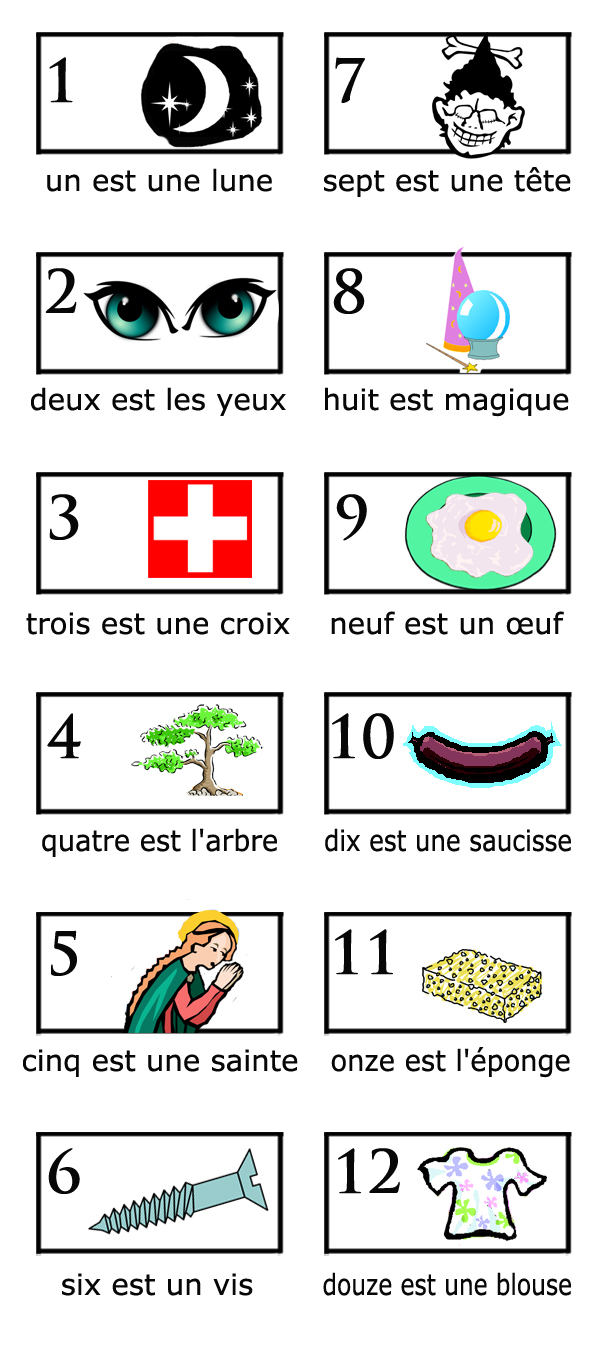
Here are pegwords I've thought up in the Italian language.

As with the original example, let's try it out with our cranial nerves.

In italiano, sono i nervi cranici:

One of the points I mention in my book on notetaking is that the very act of taking notes helps us remember — it’s not simply about providing yourself with a record. There are a number of reasons for this, but a recent study bears on one of them. The researchers were interested in whether physically writing by hand has a different effect than typing on a keyboard.

LBD: What is it?

Lewy Body Dementia is so called because the brains of affected people develop abnormal spherical masses of protein, called Lewy bodies, inside nerve cells. Lewy bodies are associated with Parkinson’s disease as well as dementia. Thus Lewy body dementia can refer to both Parkinson’s disease dementia and “dementia with Lewy bodies”. Lewy bodies are also often found in the brains of those with Alzheimer’s disease.

Unlike Alzheimer’s, however, dementia with Lewy bodies characteristically (but not invariably) begins with visual hallucinations.

Children’s understanding, and their use of memory and learning strategies, is a considerably more complex situation than most of us realize. To get some feeling for this complexity, let’s start by looking at a specific area of knowledge: mathematics.

Children's math understanding

Here’s a math problem:

Pete has 3 apples. Ann also has some apples. Pete and Ann have 9 apples altogether. How many apples does Ann have?

This seems pretty straightforward, right? How about this one:

I was listening to a podcast the other day. Two psychologists (Andrew Wilson and Sabrina Galonka) were being interviewed about embodied cognition, a topic I find particularly interesting.

What do we mean by word-finding problems?

Here are some examples:

  • increasing use of circumlocutions rather than specific terms (e.g., "I wonder where the thing that goes here is")
  • use of empty phrases, indefinite terms, and pronouns without antecedents (i.e., referring to something or someone as "it" or "him / her" without first identifying them by name)
  • increased frequency of pauses

These problems are all characteristic of Alzheimer's, but also, to a much lesser extent, of normal aging.

The thing to remember about Ericsson’s famous expertise research, showing us the vital importance of deliberate practice in making an expert, is that it was challenging the long-dominant view that natural-born talent is all-important. But Gladwell’s popularizing of Ericsson’s “10,000 hours” overstates the case, and of course people are only too keen to believe that any height is achievable if you just work hard enough.

The much more believable story is that, yes, practice is vital — a great deal of the right sort of practice — but we can’t disavow “natural” abilities entirely.

Let’s talk about the cognitive benefits of learning and using another language.

In a recent news report, I talked about the finding that intensive learning of a very novel language significantly grew several brain regions, of which two were positively associated with language proficiency. These regions were the right hippocampus and the left superior temporal gyrus. Growth of the first of these probably reflects the learning of a great many new words, and the second may reflect heavy use of the phonological loop (a part of working memory).

The limitations of working memory have implications for all of us. The challenges that come from having a low working memory capacity are not only relevant for particular individuals, but also for almost all of us at some points of our lives. Because working memory capacity has a natural cycle — in childhood it grows with age; in old age it begins to shrink. So the problems that come with a low working memory capacity, and strategies for dealing with it, are ones that all of us need to be aware of.

Traumatic brain injury is the biggest killer of young adults and children in the U.S., and in a year more Americans suffer a TBI than are diagnosed with breast, lung, prostate, brain and colon cancer combined. There are many causes of TBI, but one of the more preventable is that of sports concussion.