Articles

While parents and teachers have always strongly supported small class sizes, their belief has not always been supported by evidence. Part of the problem lies in that word “small” — what constitutes a small class? Different interventions have looked at reducing class sizes from 40 to 30, or 30 to 25. It may well be that such reductions are not sufficient to show clear benefits.

The conventional view of brain development has been that most of this takes place in utero and in the first three years, with the further development continuing until the brain is fully mature at around 10-12 years of age. The turbulence of adolescent behavior has been deemed to be mostly caused by hormonal changes. Piaget, who identified four stages of cognitive development, assessed that his highest stage — that of formal, abstract reasoning — occurred around 13-14 years (although not everyone reaches this level, which requires appropriate education).

I talk a lot about how working memory constrains what we can process and remember, but there’s another side to this — long-term memory acts on working memory. That is, indeed, the best way of ‘improving’ your working memory — by organizing and strengthening your long-term memory codes in such a way that large networks of relevant material are readily accessible.

Oddly enough, one of the best ways of watching the effect of long-term memory on working memory is through perception.

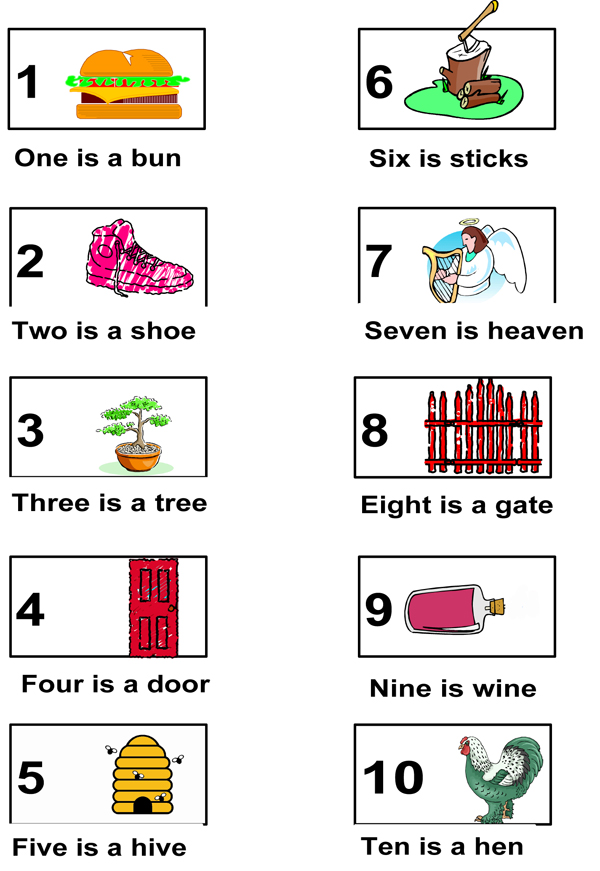
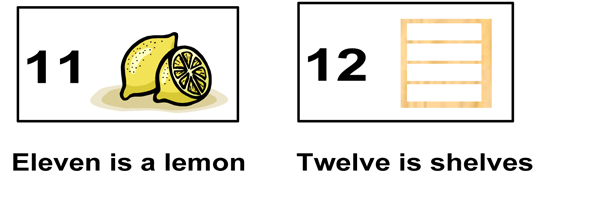
Song is a wonderful way to remember information, although some songs are better than others. Songs that help you remember need to have simple tunes, with a lot of repetition -- although a more complex tune can be used if it is very familiar. Most importantly, the words should be closely tied to the tune, so that it provides information about the text, such as line and syllable length. You can read more about this in my article on Music as a mnemonic aid, but here I simply want to mention a few specific songs designed for teaching facts.

There hasn't been a lot of research into the effects of herbs and spices on cognition and the brain, unfortunately. But on the positive side, the risk of side-effects is very low, so we don't need a lot of evidence for it to be worth trying.

Reading is a deceptive skill, for it is not a single process, but a number of processes. Thus, while you might be a fluent reader, in that you can swiftly and easily decode the letter-markings, and quickly access the meaning of the words, that doesn't mean you're a skilled reader of informational texts.

In the mid-seventies, Raugh and Atkinson had remarkable results using the keyword method to teach Russian vocabulary to college students. While later studies have not tended to find such dramatic results, nevertheless, a large number of studies have demonstrated an advantage in using the keyword mnemonic to learn vocabulary.

Some researchers have become huge fans of the strategy. Others have suggested a number of limitations. Let’s look at these.

Brain autopsies have revealed that a significant number of people die with Alzheimer’s disease evident in their brain, although in life their cognition wasn’t obviously impaired. From this, the idea of a “cognitive reserve” has arisen — the idea that brains with a higher level of neuroplasticity can continue to work apparently normally in the presence of (sometimes quite extensive) brain damage.

Prevalence of dementia

Dementia is estimated1 to afflict over 35.5 million people worldwide -- this includes nearly 10 million people in Europe, nearly 4.4 million in North America, nearly 7 million in South and Southeast Asia, about 5.5 million in China and East Asia and about 3 million in Latin America.

Michael Gove is reported as saying that ‘Learning facts by rote should be a central part of the school experience’, a philosophy which apparently underpins his shakeup of school exams. Arguing that "memorisation is a necessary precondition of understanding", he believes that exams that require students to memorize quantities of material ‘promote motivation, solidify knowledge, and guarantee standards’.